
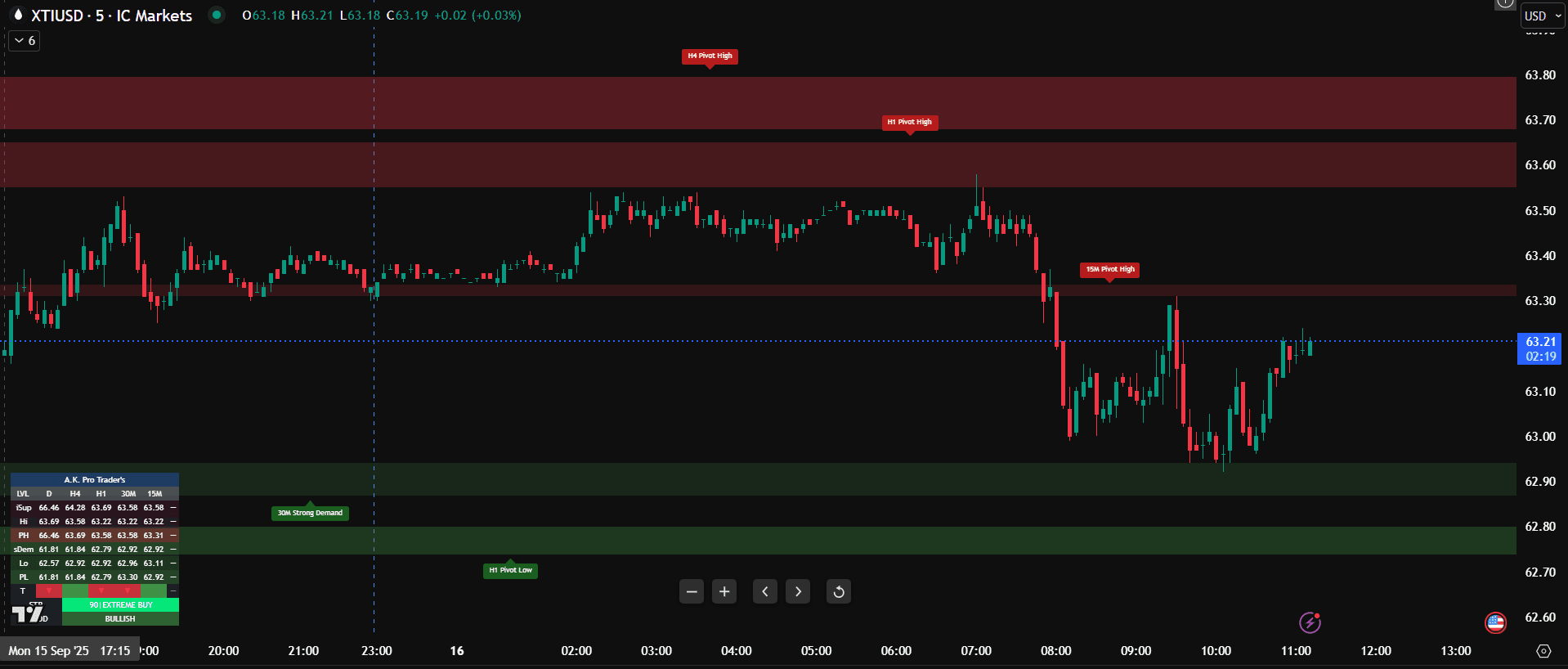
Multi Timeframe Trading Strategy for Forex and XAUUSD
Multi timeframe analysis trading strategy forex is the process of reading the higher-timeframe direction first, marking the most important key levels, then using the lower timeframe only for confirmation and execution. This keeps intraday trading cleaner because you are not reacting to every candle; you are waiting for price to reach a meaningful area before planning a trade.
The A.K Pro Trader's Multi-Timeframe Key Technical Levels indicator is built for this exact workflow. It helps traders see where higher-timeframe levels sit, where confluence is building, and where a lower-timeframe setup has more context. The goal is not to fill the chart with lines. The goal is to know which levels matter before a breakout, reversal, liquidity sweep, or pullback happens.
Quick answer: a strong multi timeframe analysis trading strategy starts with weekly or daily context, uses H4/H1 to mark bias and key levels, then drops to M15 or M5 only after price reaches a clean zone. For Gold traders, this works well alongside a smart money concepts gold trading guide because both workflows depend on structure, liquidity, confirmation and risk.
Priority Gold strategy guides to read with this hub
Use this multi timeframe page as the key-levels layer, then move into the strongest supporting XAUUSD articles below. They connect higher-timeframe levels with SMC structure, daily bias, and a complete Gold execution plan.
How Multi Timeframe Analysis Works in Forex
Forex pairs, Gold, indices and crypto all move through layers of structure. A low-timeframe candle may look bullish while the higher timeframe is still rejecting a major resistance zone. This is why many traders enter too late, chase breakouts, or buy directly into supply. Multi timeframe analysis helps prevent that by forcing the trader to answer three questions before entry.
- Direction: is the higher timeframe bullish, bearish, or unclear?
- Location: is price trading near a meaningful level, liquidity pool, or reaction zone?
- Confirmation: has the lower timeframe confirmed the idea with structure, rejection, or displacement?
When these three points align, the trade has better context. When they do not align, the trader should usually wait. A clean chart with fewer levels is often stronger than a chart full of every possible support and resistance line.
Best Timeframes for Multi Timeframe Trading Strategy
The best timeframe combination depends on the trader's style, but the logic stays the same: use higher timeframes for direction and important levels, then use lower timeframes for timing. Beginners should avoid switching between too many charts because that usually creates analysis paralysis.
Swing context
Use weekly, daily and H4 to understand the broader trend, major support and resistance, and zones where price may react.
Intraday context
Use H4 and H1 to define bias, session direction and the key levels that matter for the trading day.
Entry timing
Use M15, M5 or M1 only after price reaches a planned level. The lower timeframe should confirm the idea, not create it.
Step-by-Step Multi Timeframe Analysis Trading Strategy Forex
- Start with the daily chart: mark obvious highs, lows, trend direction and major zones where price previously reacted.
- Drop to H4 and H1: refine the daily levels into cleaner trading areas and decide whether the market is bullish, bearish or ranging.
- Remove weak levels: keep only levels that line up with structure, repeated reaction, liquidity, volume or session importance.
- Wait for price to reach the zone: do not force trades in the middle of nowhere. Location matters more than candle speed.
- Look for confirmation: use rejection, displacement, BOS, CHOCH, breakout retest or another rule-based trigger before entering.
- Plan invalidation first: place the stop beyond the level that proves the idea wrong, then calculate position size from that risk.
- Target the next logical level: aim for the next liquidity area, support or resistance level instead of using random profit targets.
This process works because it separates planning from execution. The higher timeframe gives the plan. The lower timeframe gives the timing. When traders mix those roles, they often turn every small candle into a new opinion.
How to Use Key Levels Without Overloading the Chart
The biggest mistake with multi timeframe key levels is marking too much. If every line matters, no line matters. A cleaner approach is to use only the levels that are close enough to current price, clearly visible on higher timeframes, and connected to a practical trading decision.
- Mark the previous day high and low for intraday liquidity context.
- Keep major daily and H4 levels that price has respected more than once.
- Use round numbers carefully, especially on Forex majors and XAUUSD.
- Remove levels that are too far from price or have no recent reaction.
- Use alerts so you react only when price reaches a planned zone.
The A.K Pro Trader's key levels tool can help with this because it gives structure to the chart without needing to redraw everything manually each session. Traders still need discretion: the indicator shows important areas, but it does not replace confirmation, stop placement or risk management.
Multi Timeframe Analysis for Gold and XAUUSD
Gold can move quickly, so multi timeframe analysis is especially useful on XAUUSD. A lower timeframe breakout can fail if it runs directly into a daily level, an H4 liquidity pool or a major New York session reaction zone. By starting from the higher timeframe, Gold traders can avoid many low-quality entries.
A practical XAUUSD routine is to mark the daily and H4 direction first, then define H1 levels around London and New York. After that, M15 or M5 can be used for execution only if the setup forms at a meaningful level. If you want the SMC version of this process, read the XAUUSD daily bias strategy and the complete XAUUSD trading strategy after this guide.
Common Multi Timeframe Trading Mistakes
- Using the lower timeframe to fight a clear higher-timeframe trend.
- Drawing too many levels until the chart becomes impossible to trade.
- Entering before price reaches a higher-timeframe decision zone.
- Treating support and resistance as automatic buy or sell signals.
- Changing bias after one candle instead of waiting for structure to change.
- Ignoring risk because the setup looks aligned on several timeframes.
Final Verdict
A multi timeframe analysis trading strategy forex traders can repeat should be simple: higher-timeframe bias, clean key levels, lower-timeframe confirmation and fixed risk. The A.K Pro Trader's Multi-Timeframe Key Technical Levels indicator can support that process by making important levels easier to see, but the trader still needs a plan before entering.
Use this page as the key-levels and top-down analysis layer. Then connect it with the Trading Gold with SMC guide, the XAUUSD daily bias strategy and the XAUUSD trading strategy so every trade has context, confirmation and a clear invalidation point.
This review is for educational and informational purposes only and does not constitute financial or investment advice. Past performance is not indicative of future results and all trading involves substantial risk.
FAQ: Multi Timeframe Analysis and Key Levels
What is multi timeframe analysis in trading?
Multi timeframe analysis means checking a higher timeframe for bias and key levels first, then using a lower timeframe only for confirmation and execution. It helps traders avoid taking entries in the middle of nowhere.
Which timeframes work best for intraday key levels?
A practical intraday workflow is to use the daily, H4, and H1 charts for direction and important levels, then use M15 or M5 for entry timing after price reaches a planned zone.
Should I enter every time price touches a key level?
No. A key level is a decision area, not an automatic entry. Wait for confirmation such as rejection, displacement, BOS, CHOCH, or a clean retest before planning risk and entry.
Is a multi timeframe key levels indicator worth it?
It can be useful if it helps you keep the chart cleaner and mark important higher-timeframe levels faster. It should support your trading plan, not replace confirmation, risk management, or your own judgement.
Do I need a paid indicator to trade multi timeframe key levels?
No. You can mark key levels manually, but a dedicated tool can save time and reduce missed levels. Compare pricing plans only if the workflow fits the way you already trade.
What should I check before buying access to a key levels tool?
Check whether the tool supports your market, timeframe, TradingView workflow, alert needs, and risk process. The best choice is the one that makes your plan clearer without adding chart overload.
Related links
Continue your learning with the most relevant indicator overview and plan options.
General Risk Disclaimer
All A.K Pro Traders content and indicators are provided for educational and informational purposes only and do not constitute financial, investment or trading advice. Trading leveraged products such as forex, indices, commodities and crypto involves substantial risk. Always perform your own research, use appropriate risk management and consider speaking with a licensed financial professional before making any trading or investment decisions.