
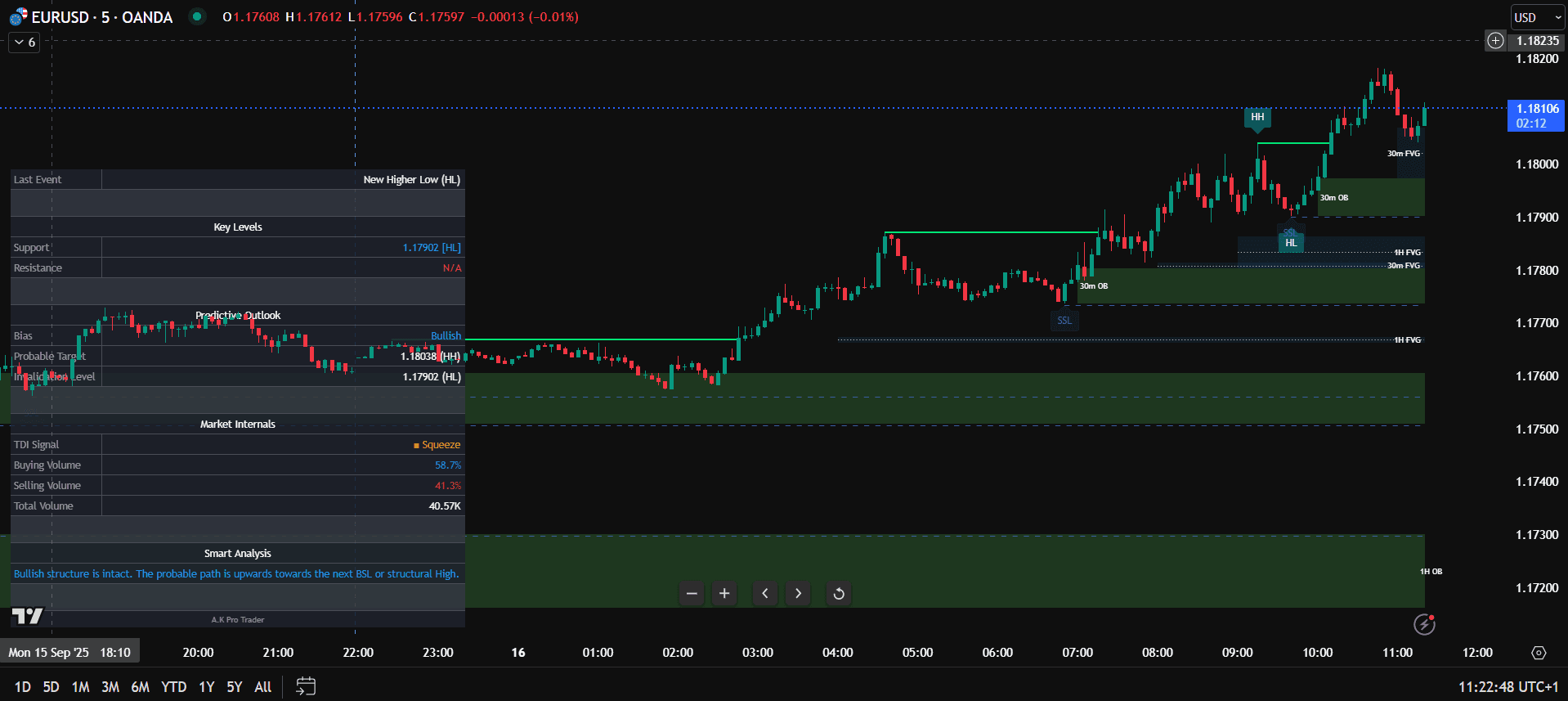
Best Time to Trade Gold Session: London vs New York
The best time to trade Gold session depends on whether London or New York gives you cleaner liquidity, volatility, and confirmation. If you trade XAUUSD (Gold)and some days feel clean while others feel chaotic, the difference is usually session behaviour, not just the strategy itself.
This guide compares London vs New York for Gold using a clean Smart Money Concepts (SMC) workflow. You’ll learn which session is best for timing XAUUSD trades, how liquidity behaves, which setups repeat, and when it is better to wait instead of forcing a trade.
Risk reminder: This article is educational. Gold can move fast and spread can widen around high-impact news. Use strict risk management and avoid emotional trading.
Quick answer: best time to trade Gold session
For most XAUUSD traders, the strongest session choices are London, New York, and the London-New York overlap. London often builds the first clean structure, New York often confirms or reverses that move, and the overlap usually gives the highest liquidity.
SMC Indicator Guide (settings + workflow)
Use the same clean layout and structure-first model across sessions.
XAUUSD Position Size Calculator
Calculate lot size from risk % and stop-loss (built for Gold).
Once you understand the best Gold session for your routine, the next step is building those timing rules into a repeatable XAUUSD trading strategy for Gold.
London vs New York: the simple truth
London Session (UK morning)
- Best for: clean structure creation + first big expansion.
- Common move: Asia range sweep → displacement → retest entry.
- Trader goal: catch the “first real direction” of the day.
New York Session (US open)
- Best for: continuation of London direction or sharp reversals.
- Common move: London high/low raid → NY reversal or trend continuation.
- Trader goal: trade liquidity around the US open and major USD news.
You don’t need to trade all day. You need one repeatable window where your setup appears often and you can execute consistently.
If you want to go deeper into each side of the comparison, read the dedicated London session strategy and the dedicated New York session strategy.
What liquidity is “important” in each session
The cleanest SMC trading comes from knowing what the market is most likely to raid. Think in simple targets:
- London often targets the Asia range high/low first, then expands away with displacement.
- New York often targets the London session high/low, then either continues the trend or flips the intraday direction.
- In both sessions, obvious BSL/SSL (highs/lows) are magnets.
Practical rule: Trade the session that is most likely to raid the levels you can clearly define on your chart. If you can’t define the obvious highs/lows, skip.
The core execution model (works in both sessions)
Whether it’s London or New York, the clean SMC sequence is the same: Liquidity → Displacement → POI → Confirmation → Retest Entry.
1) Liquidity raid
Price takes an obvious high/low (BSL/SSL). This is the “trigger” that clears stops and creates fuel for the next move.
2) Displacement + FVG
A strong impulse candle appears and often creates an imbalance (FVG). Displacement is intent. No displacement = no trade.
3) POI selection
Pick one clean POI (OB / FVG). Best quality is often OB + FVG overlap, aligned with the direction after displacement.
4) Confirmation + retest
Wait for CHOCH/BOS on M15/M5. Enter on the retest of the POI. Stops go beyond the sweep / invalidation.
Best London setups for XAUUSD
Setup A: Asia range sweep → London expansion
- Mark Asia high/low.
- London sweeps one side (liquidity raid).
- Displacement creates an FVG in the opposite direction.
- Enter on retest of the FVG/OB after CHOCH/BOS.
- Target the opposite side of the Asia range, then a key level.
Setup B: Trend day continuation from London
- HTF bias supports one direction.
- London creates the first BOS in the bias direction.
- Wait for pullback into a fresh OB/FVG.
- Enter after micro confirmation and retest.
- Target BSL/SSL created during the trend.
London is usually cleaner because it often creates the first structured move of the day. If you only trade one session, London is a strong choice.
Best New York setups for XAUUSD
Setup A: London high/low raid → NY reversal
- London creates clear session highs/lows.
- NY opens and raids the London extreme (liquidity).
- Displacement appears back into the range.
- Enter on retest of the POI with CHOCH/BOS confirmation.
- Target mid-range first, then opposite liquidity.
Setup B: NY continuation (when London already trended)
- London already moved strongly in one direction.
- NY pulls back into premium/discount (re-accumulation / re-distribution).
- Wait for confirmation (BOS/CHOCH) in trend direction.
- Enter on retest of the OB/FVG.
- Target the next liquidity pool and key level.
New York can be powerful, but it can also be violent around major USD news. If you trade NY, reduce frequency and increase selectivity.
Risk rules (London vs NY)
London risk rules
- 1–2 attempts maximum.
- Fixed risk (example: 0.5%–1%).
- Only trade when Asia range is clear.
New York risk rules
- Trade fewer setups (quality only).
- Be news-aware; stand aside near high impact events.
- Stops must be beyond the sweep (no tight guessing).
If your stop is correct but your lot size is wrong, you still lose. Use the XAUUSD Position Size Calculator to keep risk fixed and professional.
London vs NY checklist (use this daily)
- HTF bias is clear (H4/H1 structure agrees).
- Session range is marked (Asia for London; London range for NY).
- Obvious liquidity target identified (BSL/SSL).
- Liquidity raid occurs (high/low taken).
- Displacement appears and leaves an FVG.
- POI selected (OB/FVG overlap preferred).
- Confirmation appears (CHOCH/BOS on M15/M5).
- Entry on retest; stop beyond invalidation.
- Risk is fixed and small; daily max loss defined.
Unlock the full indicator suite
SMC + Toolkit + Key Levels (bundle or single).
Toolkit guide (clean execution workflow)
Build a professional chart layout for sessions and confluence.
FAQ: Best time to trade Gold session
What is the best time to trade Gold session?
The best time to trade Gold session is usually London, New York, or the London-New York overlap because liquidity, volume, and volatility are normally stronger than quiet market hours.
Is London or New York better for XAUUSD trading?
London is often better for the first clean structure and Asia range sweep. New York is often better for continuation, sharp reversals, and USD-driven volatility after London has already built the range.
Should beginners trade both sessions?
Beginners usually do better by choosing one session first. Master London or New York with one repeatable setup before trying to trade both windows.
How do I use session timing with Smart Money Concepts?
Mark the session highs and lows, identify the likely liquidity target, wait for a sweep or displacement, then enter only after CHOCH, BOS, or another clear confirmation signal.
All A.K Pro Traders content and indicators are provided for educational and informational purposes only and do not constitute financial, investment or trading advice. Trading leveraged products such as forex, indices, commodities and crypto involves substantial risk. Always perform your own research, use appropriate risk management and consider speaking with a licensed financial professional before making any trading or investment decisions.
Related links
Continue your learning with the most relevant indicator overview and plan options.
General Risk Disclaimer
All A.K Pro Traders content and indicators are provided for educational and informational purposes only and do not constitute financial, investment or trading advice. Trading leveraged products such as forex, indices, commodities and crypto involves substantial risk. Always perform your own research, use appropriate risk management and consider speaking with a licensed financial professional before making any trading or investment decisions.